Properties situated near the wetlands along Stony Creek Reservoir or timbered tracts in Birchwood and Oak Level frequently experience rapid insect emergence during the warmer months. Mosquitoes and biting flies seek…
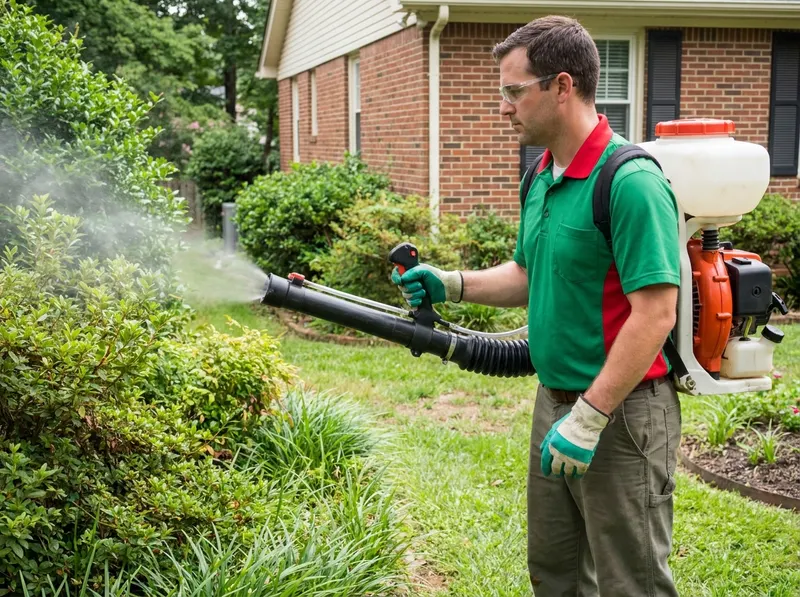
Properties situated near the wetlands along Stony Creek Reservoir or timbered tracts in Birchwood and Oak Level frequently experience rapid insect emergence during the warmer months. Mosquitoes and biting flies seek shaded foliage, tall turfgrass, and poorly drained drainage swales during the heat of the day. A dedicated reduction protocol isolates these harborage points rather than coating entire yards with broad-spectrum aerosols. Once applied by a licensed technician, micro-encapsulated residuals adhere to the underside of leafy foliage where adult insects rest between blood meals, delivering sustained knockdown for 21 to 30 days without washing away in standard North Carolina summer rainfall.
Controlling biting pests differs fundamentally from treating indoor crawling insects. While structural pests require interior baseboard sweeps and crawlspace dusting, exterior insect reduction focuses exclusively on the outdoor envelope. For properties bordering open acreage in Sandy Cross or Castalia Springs, continuous migration occurs from neighboring woodlots. A single-application suppression reduces active adult counts on high-use patios and decks for special events, whereas recurring 28-day treatments sustain an active chemical threshold throughout the April to October breeding window. The trade-off centers on duration: one-time sprays lower biting pressure immediately for 3 to 4 weeks, but sustained exclusion over an entire season requires ongoing replenishment of outdoor barrier zones.
Water-holding reservoirs serve as the primary vector production source across Nashville communities like Westwood, Pleasant Grove, and Forest Hills. Standing water collecting in catch basins, gutters, and low-lying ornamental beds allows mosquito larvae to reach maturity in 7 to 10 days. Barrier applications intentionally pair adulticides with microbial Bacillus thuringiensis israelensis (BTI) briquettes placed in retained water. This dual-action approach arrests larval development beneath the water surface while neutralizing mature insects resting in shaded perimeter vegetation.
Every job gets a firm, written price after a free on-site visit.
Tell us about your mosquito and biting fly reduction job in Nashville and we'll send a clear, written quote, usually the same day.
 Calvirox Pest Control