Mechanical rodent exclusion operates as a permanent defense barrier rather than a temporary population reduction measure. Traditional rodent control relies on anticoagulant bait stations or snap traps to remove…
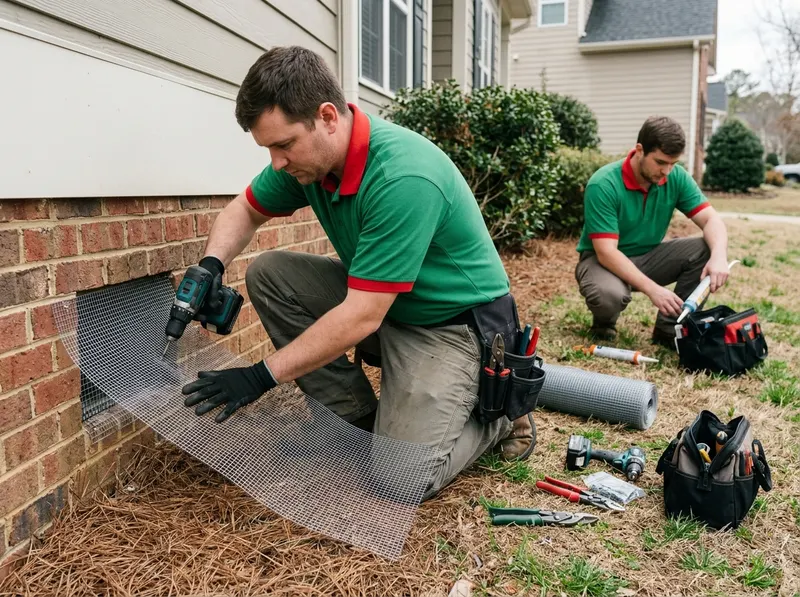
Mechanical rodent exclusion operates as a permanent defense barrier rather than a temporary population reduction measure. Traditional rodent control relies on anticoagulant bait stations or snap traps to remove existing mice and rats, but open construction gaps allow new rodents to enter living spaces continuously. In older crawlspace foundations common in Westwood and Birchwood, unsealed crawlspace vents, HVAC chases, and settling masonry create unmonitored pathways into floor systems. Adult Norway rats compress through openings measuring one-half inch, while juvenile house mice pass through gaps measuring one-quarter inch, which equals the width of an ordinary lead pencil. Installing 19-gauge galvanized hardware cloth over crawlspace vents and sealing sill plate gaps stops these incursions physically, removing the reliance on continuous indoor chemical baiting.
The trade-off between exterior trapping and structural exclusion centers on durability versus upfront labor. Setting bait boxes along foundation perimeters lowers exterior rodent counts near Sandy Cross or Oak Level outbuildings, but weathering bait degrades, and exterior populations repopulate quickly during seasonal agricultural shifts. Mechanical exclusion requires an upfront structural investment to locate and reinforce every exterior entry point, yet it eliminates recurring maintenance contracts and prevents secondary indoor odors caused by unrecovered pests. In split-level homes near Stony Creek Reservoir, brick-to-siding junctions often require custom-bent aluminum flashing to close off settling gaps where field mice gain attic access. Every crawlspace access door, utility conduit, and roof return receives physical metal barriers that gnawing teeth cannot compromise.
Properties in Forest Hills, Pleasant Grove, and Castalia Springs frequently feature detached workshops, historical masonry, or crawlspace moisture vents requiring specialized hardware. A typical whole-home exclusion begins with a ground-to-fascia audit, systematically identifying gap measurements along plumbing penetrations, air conditioning line sets, weep holes, and soffits. If entry holes show active rodent grease marks or gnawing, interior containment measures run concurrently with exterior repairs so no animals remain trapped inside structural walls. Work across Nashville excludes general framing reconstruction or masonry foundation rebuilds; services focus strictly on specialized pest barrier installations, sealing existing gaps up to 3 inches wide to preserve structural defenses.
Every job gets a firm, written price after a free on-site visit.
Tell us about your mechanical rodent exclusion job in Nashville and we'll send a clear, written quote, usually the same day.
 Calvirox Pest Control